One of the most impressive aspects of Sora 2 is its understanding of real-world physics. We stress-tested the model with increasingly complex physical scenarios.
Water Physics
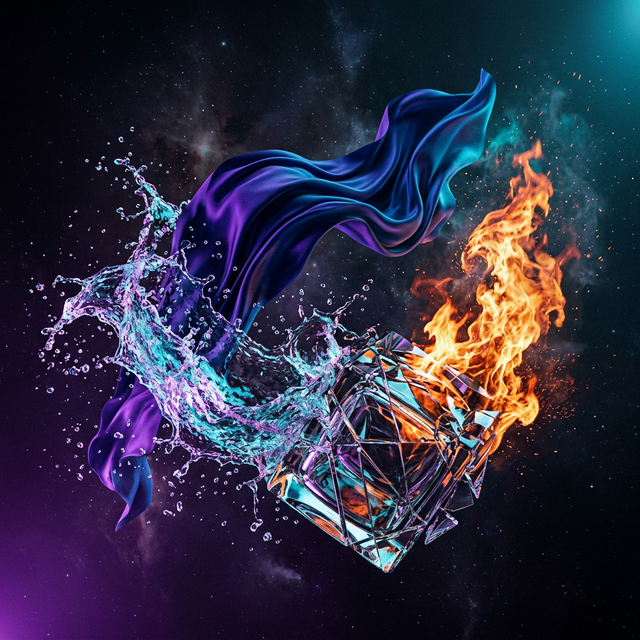
We prompted Sora 2 with various water scenarios: rain on glass, ocean waves, pouring liquid, and underwater scenes. The results were remarkable — water behaves naturally with proper refraction, rippling, and splashing. Surface tension effects are visible in close-up shots.
Fire and Smoke
Fire simulations show proper heat distortion, flickering, and ember generation. Smoke rises realistically with appropriate turbulence. Candle flames respond convincingly to implied airflow.
Cloth and Fabric
Cloth draping has been dramatically improved. Silk, cotton, and denim all behave differently. Wind effects on flags and curtains look natural. The model even handles wrinkle formation and fabric weight correctly.
Glass and Reflections
Transparent and reflective surfaces were historically challenging for AI models. Sora 2 handles glass refraction, mirror reflections, and metallic surfaces with impressive accuracy. Caustic light patterns through glass are a standout feature.
Where It Still Struggles
- Complex chain reactions (domino effects)
- Precise object counting during physics events
- Extreme slow-motion of particle systems
- Interactions between more than 5 objects simultaneously
The Bottom Line
Sora 2's physics simulation is good enough for professional-quality B-roll and creative projects. While it won't replace dedicated VFX software for precise simulations, it's remarkable for a generative model.